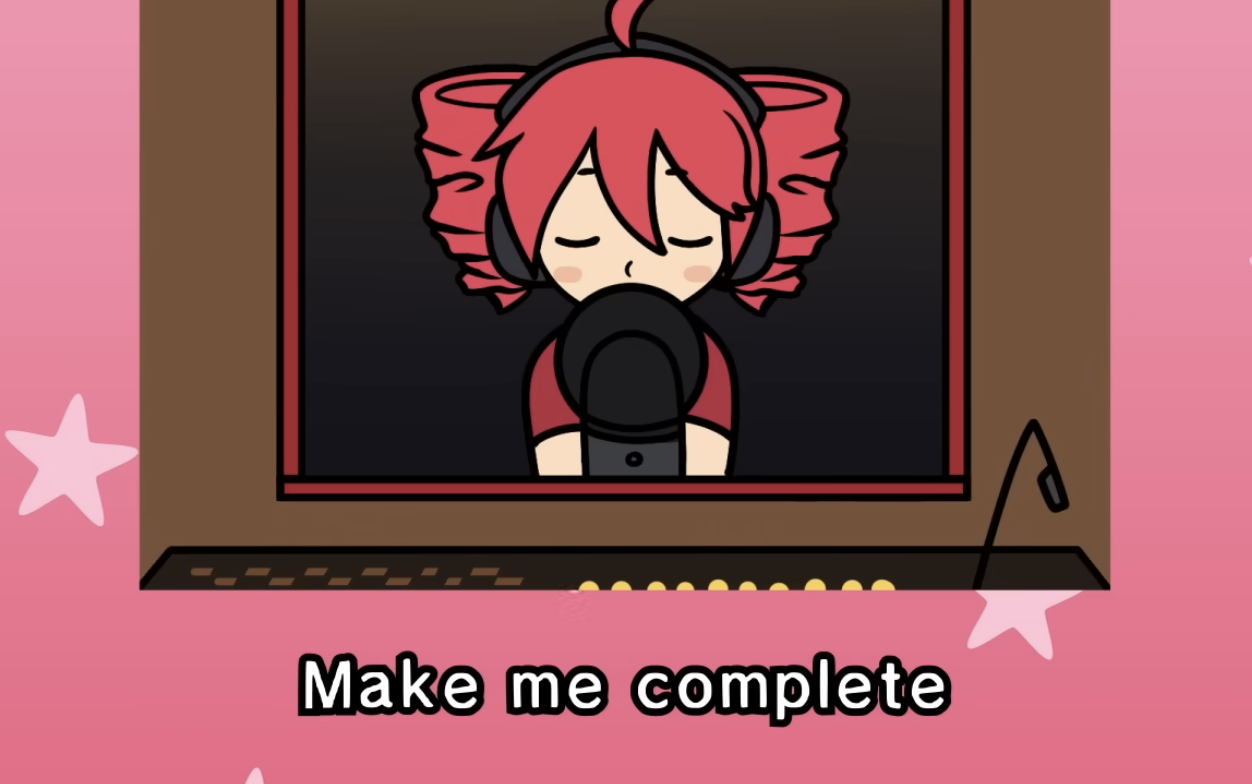
Things I learned from being trained in singing for 2 years
Or: an attempt to summarize singing theory. These are all quite physical processes that are different for everyone, and this is a small part of my process. I am not a teacher or anything, but just relaying what I've learned. I hope it can be helpful for anyone interested.
- Placement is important
I grew up listening to Vocaloid. So subconsciously, I tried to imitate the robotic voices I heard. I would often sing pretty nasally because I found it was what worked for me, but it doesn't let you do much. I had to learn to create space in the back of my throat.
In the anatomy of your mouth, you have your soft palate and your hard palate. Your hard palate is the bony part near your teeth, and your soft palate is in the back of your mouth near your uvula. When you yawn, you can feel your soft palate raising.
Good placement tends to emphasize a lifted soft palate, minimizing constriction in the back of your throat.
- Tension murders vibration
My acting professor's favorite saying. The voice is a physical thing, and it quite literally gets easier to sing if the muscles in your jaw and face are relaxed. Are you clenching your jaw? Are you 'mewing' by resting your tongue on the top of your mouth? Jaw tension!
Most singers perform standing up and straight if they can help it because your posture affects the way you sound. If you push your neck forward or back, it constricts the muscles in your throat that produce sound. What does your voice sound like when you're facing the ceiling? What about the ground? Try it yourself.
Some ways you can ease up on bodily tension: Stretching, "shaking out" parts of your body, planking, giving your face a massage. Particularly, try massaging the occiput, or back of your head. It's connected to the muscles in your jaw.
Also, mental stress leads to body tension, too. Your muscles respond to the information your brain gives it. If you imagine yourself yawning, you'll want to yawn. If you imagine yourself screaming, your throat might feel tired, like you actually did it. If you tell your jaw muscles "Hey man, loosen up! It's okay!", they'll listen.
- Know yourself
Warmups are your way of checking in with your body for the day. I use a pre-recorded track to practice for about 10 minutes before I get into it. I am sure there are warmups videos you can use online.
Subsequently, voice cracks are not necessarily a bad thing! While it's best not to overdo it and risk damage, voice cracks tell you that your body is trying to figure out how to deal with this new information. Singing through voice cracks can help you build the muscles needed to get the note in the future.
Sometimes I intentionally scream and fry my voice for covers, and then I try to minimize talking for about a day... I doubt it's healthy. If you're feeling fatigued, pull back on belting. If you're feeling physical discomfort or like your voice is fried, stop singing.
When you feel that you're singing particularly well, where do you feel it in your body? Try to remember this and attempt to replicate it.
- Breath support
Good breath support can make a world of difference. Try noticing if your singing is breathy or airy: can you let less air out, and more pure sound? My vocal teacher will give me a straw for this, doing warmups while having about half of the straw's end covered with my finger. It forces you to be purposeful with the breath you use.
You can get a lot of power in your voice if you imagine yourself breathing down in your stomach rather than up in your throat. It takes pressure off of your throat and jaw, allowing for less tension and more structural support. This helps a lot in belting, which is kind of like yelling but without going so far as to damage your voice.
Laying down on the floor forces you into a position of taking your breath away from your throat and towards your stomach.
- If you consider yourself a musician, learn an instrument
Generally, this mostly applies to singers who want to be performers outside of online spaces, but professional singers and those obtaining music degrees are often expected to learn to sight-read. Sheet music has so much valuable information that's helped me stay on tempo and pitch within musical theatre, even if I didn't have the song entirely memorized yet. Learning a piece by ear, you may end up deviating from what's written or create your own melodies. I think that while you have a lot more freedom to do what you want when making independent amateur covers, it's something to consider.
The nice part about Vocaloid is that if you're unsure about a melody, a lot of songs have UTAU arrangements (.usts) that you can then download yourself and see what exactly's being sung. More popular songs also have user-made arrangements up on the website MuseScore, some offering specifically vocal guides for songs.
- Singing is harder when you're menstruating
This is more case-by-case and depends on the person, but I definitely feel it. Fluctuating hormones can lead to inflammation of the vocal cords, leading to cracking and difficulty sustaining notes. And it's hard to have good breath support when you're in physical pain!
- Pronunciation
Singing pronunciation is different than speaking pronunciation!
The English language has this thing called dipthongs, which is when a word has a secret extra syllable. These are really annoying in singing because navigating these quick changes in your mouth can make you crack or sound out of tune.
For example: The word "rain" has a dipthong. Ray-ee-nn.
So, if "rain" is the last word in a lyric you're holding out, you don't want to sing it like "raaaaiiiiiinnnnn."
Rather, you want to draw out the last vowel sound, and only briefly touch on the second sound at the end. "Raaaaaaaaaaaain."
Be careful of ending in harsh consonants, like "riverrrrrrrrr". We can use the same technique here: draw out the "e" sound, and stick on the "r" sound only at the very end.
- Scooping
Scooping is when you gradually slide from a lower note into a higher one, rather than landing directly on the next note. It can be a stylistic choice, but it more often sounds like you're unsure of what the next note actually is.
- Practice!!!
Join a choir if you can! It's a great way to learn and improve. I improved the most rapidly when I was in a musical and forced to sing every day, multiple hours a day, 4-5 days a week.
- Notes specifically for Vocaloid songs
It might seem like stating the obvious, but these songs are not written for human beings! Sometimes it's gonna sound better to just do what you're comfortable with rather than forcing yourself to do a crazy octave jump or to sing that really high note. But usually, recording a harmony track or more than one main track helps cover up a lot of imperfections. (And mixing/tuning in general, but that's a whole other can of worms...)
Maybe I'll write up something like this for mixing too. This shit still eludes me but it's starting to sound decent so I must be doing something right.
|